Guardian highlights Two Kinds Of Empty in Abandoned Britain series flagging the failed housing policies that drive vacancy up
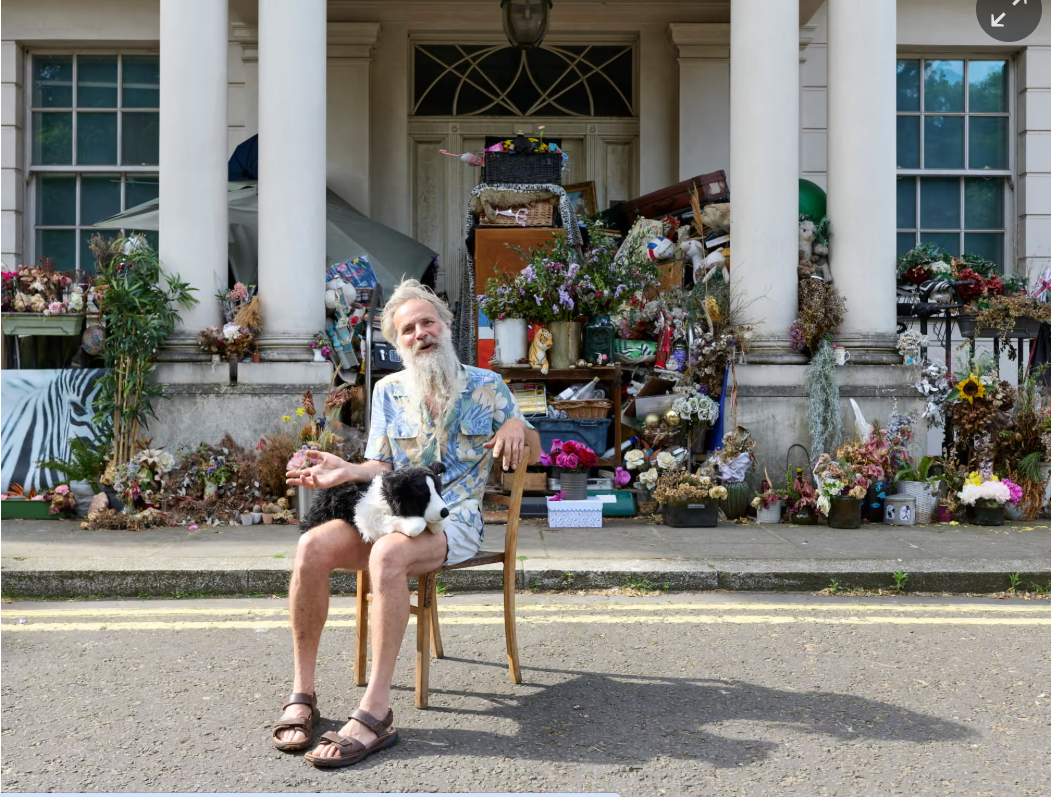
It is an eyecatching image - a homeless man sits outside his ‘home’, the porch of what was once Britain’s most expensive home, owned in recent decades by foreign leaders and shrouded in mystery. He is its only resident but here he sits on his found furniture without a roof over his head, while a huge and valuable site in central London awaits its next lucrative sale to another owner who won’t live there.
In two recent articles in The Guardian you can see parallel failures of our housing policies that leave homes vacant for decades. In a June article on Rutland Gate in London, once home to assassinated Lebanese Prime Minister Rafik Hariri, the issue of the empty foreign-owned mansions which have hollowed out areas of Central London is raised. Valuable assets sitting empty storing wealth.
Professor Rowland Atkinson of Sheffield University, and author of ‘Alpha City: How London was Captured by the Super-Rich’ is quoted in the article, saying: ‘“It’s bizarre and perverse that, in the middle of a housing crisis and a social crisis more broadly, you can find a magnificent home like that lying empty for years, homes that are not functioning as homes but as assets, part of a portfolio to be traded, or as a temporary residence for a small number of weeks a year.”
Chris Bailey of Action on Empty Homes is also quoted: ‘“The places building the most housing have mysteriously managed to produce the highest level of vacancy,” says Chris Bailey of the charity Action on Empty Homes, pointing out that building houses doesn’t necessarily solve the housing crisis. “We’re building the wrong housing, it’s that simple. Towers of luxury apartments don’t house poor or homeless people.”
Some of what is called residential housing isn’t even that, he says: “It’s basically a piece of London that’s been sold to an overseas entity that’s now sitting on it.” He’s talking about overseas-owned residential property, 45% of which is in London, and much of which is empty.’
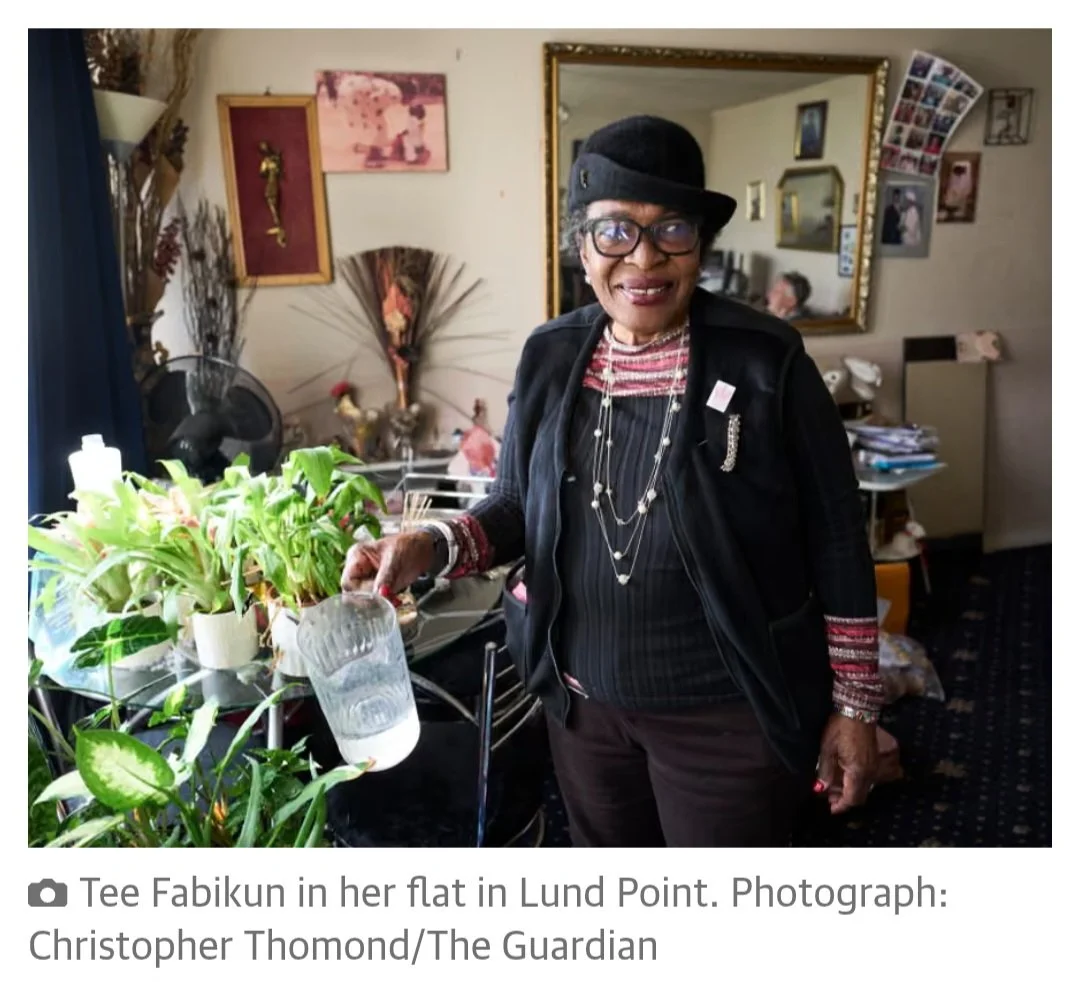
In an earlier article in the same series The Guardian highlighted the equally frustrating waste of empty social housing in London - it may not be on the same scale as private vacancy in the capital which tops 150,000 homes but 11,000 empty social homes is too many and, for those last few residents left on the all-but empty Carpenters Estate in Newham, its another tragic waste of homes when so many families are homeless and placed in Temporary Accommodation, sometimes many miles away outside London.
London’s vacancy figures currently include a third of all the empty social homes in England - this is a snapshot figure and NOT we would stress comparable to the 303,000 long-term empty total; many of these 11,000 will be between lets, perhaps awaiting refurbishment or upgrade. But what is important to note is that some WILL be long-term empty and some of the longest of those will be driven by so-called estate regeneration schemes, involving very slow so-called ‘decants’ of existing homes to allow council estates to eventually be demolished and rebuilt.
This kind of ‘regeneration’ will usually involve the new development adding higher numbers of homes, often funded by what is known as cross-subsidy from tall towers of privately owned investment housing. When deals stall, face delay or fall through, situations like the Carpenters Estate can emerge with its aging sixties towers occupied only by a handful of residents. But these residents stories of both the past and present on the estate highlight the weakness of a promise of new housing that may involve the creation of huge volumes of empty housing that remain that way for decades. This means that community is destroyed and dispersed and a meaningful place becomes simply a site for future profit generation; and if we are very lucky perhaps a smattering of the social homes we actually need.
In the article Action on Empty Homes’ Chris Bailey is quoted in frank terms, channeling the frustration we all must feel when we hear the story of the Carpenters Estate’s decades of emptiness,. amidst an intensifying housing crisis where over half of all the homeless families in England are Londoners: ‘The Carpenters, Bailey says, is one of many examples, “where they decided the time was ready to knock it down and started asking people to leave, finding them new places, offering to buy them out and then it hasn’t happened, because there have been breakdowns in plans, in government funding, inaction by the local authority.”
His assessment of the situation at the Carpenters is blunt: “It’s an awful lot of housing to keep intentionally empty when you’re, frankly, pissing away vast amounts of public money to private landlords on keeping people in really shit accommodation, which is going to diminish the educational achievements of their children and cost us all more as a society in future – as a direct result of the fact that you’re taking social housing out of use.”
If an approach based on retrofit and refurbishment had been adopted decades ago, perhaps the shattered dreams of the many residents who initially supported change and the prospective developers and councillors who promised to deliver it, might never have turned into the nightmare of wasted homes we see on The Carpenters Estate today, where finally another regeneration plan is making promises of renewal - again with a timescale stretching to decades.